When the sun beats down and the surface warms, bass change their routine, and summer bass fishing with sonar skills become the difference between a slow day and a full livewell. Bass look for comfortable temperature, enough oxygen, food and cover, and in summer that often means deeper ledges, brush piles, weed edges and shaded docks. Sonar shows all of these without guesswork. This guide explains how bass behave in summer, how to use your fish finder and GPS to find their likely spots, which structures to check first, how to adapt to time of day and weather, and how to present lures at the right depth once you have found them.
Summer bass fishing with sonar: how heat changes bass behaviour
Heat changes where bass feed and rest.
Seeking comfort and oxygen
Warm surface water holds less oxygen, and bass often move to depths or cover where temperature and oxygen are better. In many lakes, this means they hold near the thermocline or around deep structure. Our thermocline fish finder guide explains how to spot the layer.
Feeding windows
Bass feed most actively in low light, early and late, and at night. In bright midday sun they often rest in shade or deep water and feed only when bait comes by.
Following bait
Baitfish tend to concentrate around structure, and bass follow. Finding bait is often the key to finding bass.
Structures to check first
Start with high-percentage areas.
Deep ledges and drop-offs
Ledges near deeper water give bass quick access to cool depth. See our fishing drop offs guide.
Humps and points
Offshore humps and long points collect bait and offer ambush spots. Mark them from the chart and confirm with sonar.
Brush piles and timber
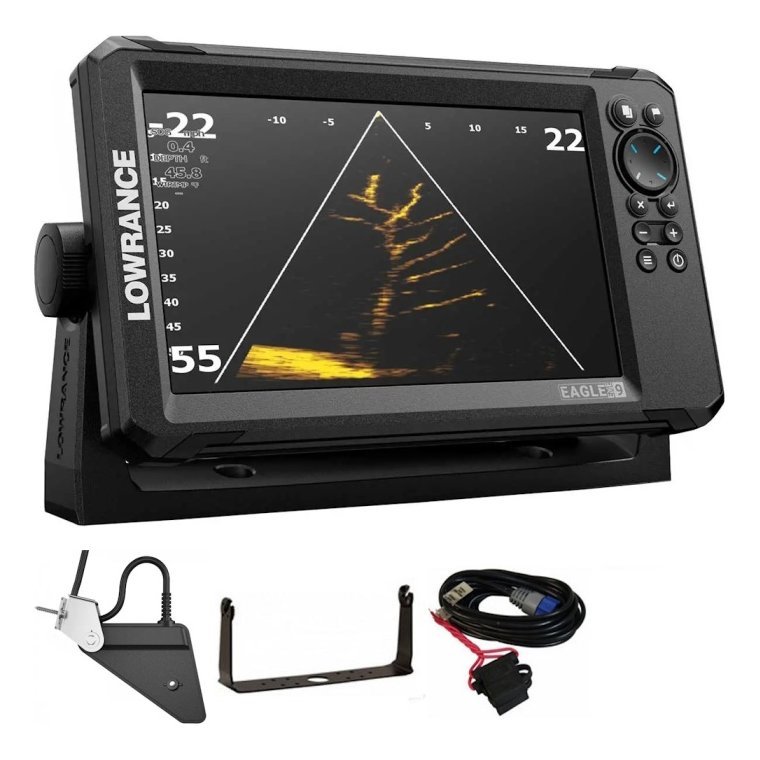
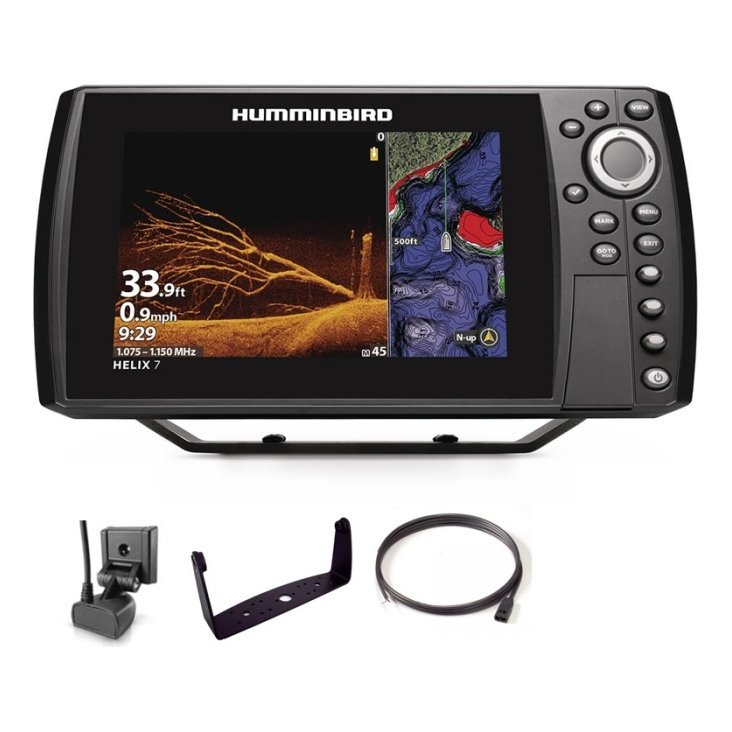
Sunken brush and standing timber hold bass and bait. Down imaging shows them clearly. Our side imaging vs down imaging guide explains how.
Weed edges
Deep weed edges give cover and oxygen. Look for the outer edge where weeds meet open water.
Docks and shade
Shaded docks and bridges offer cover in bright sun. See our docks and piers sonar guide.
Using sonar to find bass
Look for bait first
Clouds and balls of baitfish near structure are the best clue. Bass often sit just below or beside them.
Read the marks
Arches and marks close to the bottom or cover may be bass. Zoom in to separate them. Our guide on how to read a fish finder can help.
Use the right settings
Adjust sensitivity and range to see subtle marks in deep water. Read our fish finder settings guide.
Use imaging to scan for cover
Side imaging helps you find brush and rock quickly. Mark spots with waypoints. See our marine GPS waypoints guide.
Time of day and weather
Early and late
Fish shallower structure near deeper water in low light. Cast around points and edges.
Midday
Move deeper or into shade. Use sonar to find fish holding on ledges and brush.
Night
Bass often move shallow to feed. See our night fishing with electronics guide.
Fronts and wind
Bright, calm weather after a front can make bass tight to cover, and wind-blown banks can trigger feeding. Adapt to the day.

Presenting lures at the right depth
Sonar tells you the depth; your lure choice puts the bait in the zone.
Deep-diving crankbaits and jigs
Use them to reach ledges and brush at the depth you see on the screen.
Drop shots and Carolina rigs
Slow, precise presentations suit suspended or tight bass.
Vertical jigging
Drop spoons and jigs directly to fish you see below the boat. Read our vertical jigging with sonar guide.
Match the forage
Choose lures that mimic the bait you saw on sonar.
Boat control and positioning
Stay off the fish
Position the boat so you can cast to the structure without driving over it.
Use GPS to hold position
Waypoints and the GPS track help you hold the boat in the right place, even in wind.
Use a trolling motor
A quiet electric motor reduces noise and allows precise positioning.
Heat safety and care of fish
Protect yourself
Drink water, wear sun protection and take breaks in extreme heat.
Protect the catch
Keep fish in the water as much as possible, handle them gently and release them quickly, especially in warm water.
Protect electronics
Heat shortens the life of screens and batteries. See our summer boating electronics heat protection guide.
Common mistakes
- Fishing shallow cover in bright midday sun.
- Ignoring bait.
- Driving over structure and spooking fish.
- Not marking productive spots.
- Skipping sensitivity adjustments in deep water.

A midsummer day plan
Start before dawn with shallow cover and topwater or moving baits near points that touch deep water. As the sun rises, move deeper and run a line along a ledge you marked from the chart, watching for bait. If you find a stacked school, circle slowly, mark the spot and make a few casts or vertical drops. By late morning, check shaded docks or the deep edge of weeds. In the heat of the afternoon, rest fish and fisherman alike, and then return to the best spots of the day for the evening bite. This approach respects bass behaviour and makes the most of what your sonar tells you.
Review and refine
After the trip, rename waypoints with depth and notes, and write down the lures and speed that worked. Next time you can go straight to your best spots rather than starting again from scratch.
Reading summer structure in more detail
Summer bass rarely sit on the most obvious feature. A long point may hold bass only at one corner, and a brush pile may hold fish only on its deeper side. Sonar lets you work out the details. Make a slow pass across the structure at its shallowest and deepest parts, and then circle it to check each side. Look for bait pressed against the structure, a hard bottom that returns a strong signal and any small changes in depth, such as a notch or a pocket. The best spot is often a few metres from the one that looks best on the chart, and the screen shows you the difference.
Use your waypoints as a checklist
Mark the corners and edges of a good structure with separate waypoints, and label them by depth. When you fish it, work from one waypoint to the next, and note which one produces. After a few trips you will know exactly where on each structure the fish are likely to be at a given time of day.
Adjust for clear and stained water
In clear water, bass often sit deeper and spook more easily, so stay farther from structure and use lighter, more natural presentations. In stained water, they may hold shallower and closer to cover, and you can fish nearer. Sonar signal quality may be affected by suspended particles, so adjust sensitivity accordingly.
Gear and electronics for summer bass
A fish finder with CHIRP sonar and down imaging helps pick out bass tight to cover. GPS makes it easy to mark and return to deep spots. On a bass boat, a second screen at the bow lets you watch sonar while using a trolling motor. Our bass boat electronics guide explains how to set up a pair of displays, and our transducer guide shows how to mount them. A clean power system keeps the signal quiet when you run a trolling motor and a fish finder together.
Frequently asked questions
How deep do bass go in summer?
It varies by lake, but many bass use ledges, brush and layers deeper than in spring.
What sonar settings are best for summer bass?
Use enough sensitivity to see bait and fish, and zoom on the bottom. Adjust to water clarity.
Do I need GPS for summer bass fishing?
It helps you mark and return to deep structure.
What is the best time to fish in summer?
Early morning, evening and night are often best.
Make the heat work for you
Summer bass fishing sonar work is about finding the comfortable depth, the bait and the structure that connects them. Use your chart, your fish finder and your GPS together, and mark what works. Browse fish finders and GPS units in our shop, or contact us for help choosing a unit for bass fishing.
Related reading from Fishtrail Outfitters
- Thermocline Fish Finder Guide: How to Spot the Thermocline and Catch Fish
- Fishing Drop Offs and Ledges With Sonar: Find Fish on the Edge
- Winter Fishing With Sonar: Find Slow, Deep Fish in Cold Water
- Side Imaging vs Down Imaging: Which Sonar View Do You Need?
Products mentioned in this guide
- Fishfinder Garmin Striker Vivid 4CV + Sonar 77/200/455/800 KHz
- Fishfinder Garmin Striker Vivid 5CV + Sonar 77/200/455/800 KHz
- Fishfinder Garmin Striker Vivid 7CV + Sonar 77/200/455/800 KHz
Further reading: U.S. Coast Guard boating safety resources · National Weather Service marine forecasts
Questions before you buy? Contact Fishtrail Outfitters or browse the shop.