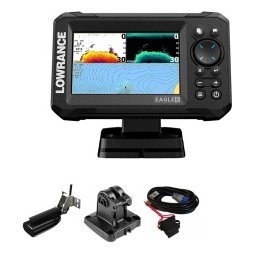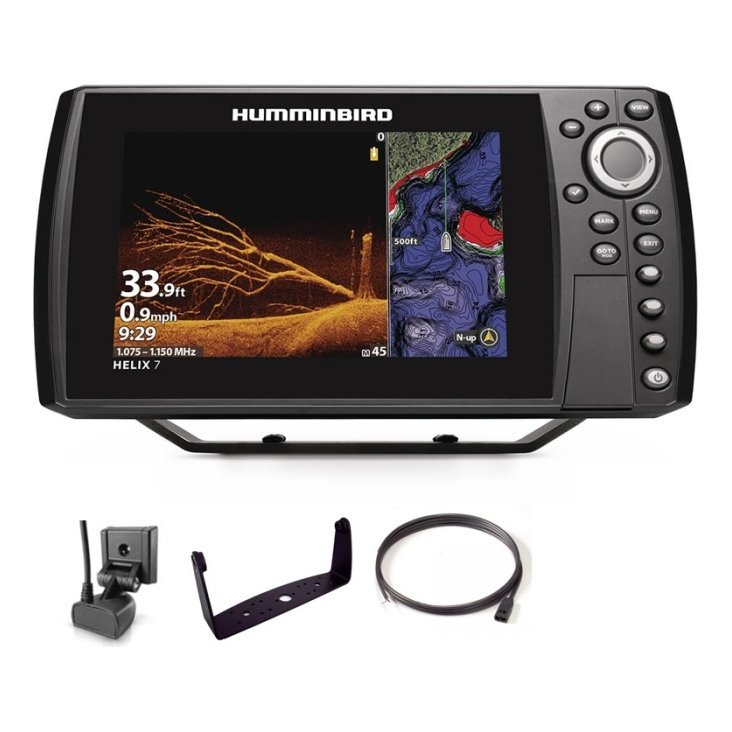
Few tools improve ice fishing as much as an ice fishing fish finder, because it turns a hole in the ice into a window. Instead of waiting blindly, you can see the depth, the bottom, bait passing through and fish rising to examine your lure. That immediate feedback helps you choose where to drill, how deep to fish and when to move. This guide explains the types of sonar used through ice, how to choose between them, how to set up a transducer for a clear signal, how to read what you see, how to keep electronics working in the cold and, above all, how to stay safe on the ice. Always check local ice conditions and regulations before you go.
Why use an ice fishing fish finder
See what is below you
Through a small hole you see nothing without sonar. A fish finder shows depth, structure, bait and fish.
Fish more efficiently
You can check many holes quickly, find the depth where fish are holding and avoid wasting time on empty water.
Watch fish react
Sonar shows fish approaching, hesitating and striking, which helps you adjust presentation.
Types of ice fishing sonar
Flashers
A flasher shows sonar returns as flashes of colour on a circular or linear display, updating instantly. Many ice anglers like the immediate view of a lure and fish.
LCD and graph units
An LCD unit shows a scrolling picture like a boat fish finder, useful for seeing history and structure. Compact units with ice transducers suit sled use.
Castable and portable sonar
Some portable sonar devices work through ice, using a transducer in the hole and a phone or screen to display. Read our portable fish finder guide and Deeper sonar guide.
Using a boat unit
Some anglers adapt a boat fish finder with a portable power supply and an ice transducer. This needs care with power and mounting.
Choose the right unit
Think about how you fish
If you walk and drill many holes, choose a light, compact device. If you fish from a shelter, a larger screen may be more comfortable.
Check power and cold performance
Cold reduces battery life, so check battery type and run time. Carry spare power.
Consider GPS and mapping
Some units include GPS for marking holes and routes. See our fish finder with GPS guide.
Match the transducer
Ice transducers are designed to fit through holes and float or hang in water. Check compatibility.
Set up for a clear signal
Position the transducer
Lower it into the water, clear of ice and slush. Keep the face pointing straight down and avoid bubbles.
Clear the hole
Remove ice chips and slush so they do not block the signal.
Adjust range and sensitivity
Set the range slightly deeper than the water, then adjust sensitivity to see fish and your lure clearly. See our fish finder settings guide.
Keep cables and connectors dry
Moisture freezes. Wipe connections and protect them.

Read what you see
The bottom
A solid band shows the bottom. Soft versus hard bottoms look different. Our how to read a fish finder guide explains.
Your lure
On many units your lure shows as a distinct mark above the bottom, and fish approach it. Watching this is the main benefit.
Bait and fish
Look for bait clouds and marks. Suspended fish are common in winter. See our baitfish on a fish finder guide.
Interference
Nearby units can cause interference. Adjust frequency or distance if the screen is noisy.
Find fish on the ice
Use a chart or map
Lake maps show basins, drop-offs and humps. Plan holes in likely areas. See our fishing drop offs guide.
Drill and check
Drill several holes and check depth and bait. Mark productive ones.
Move with purpose
If a hole shows no activity after a few minutes, move on.
Mark your holes
Use GPS waypoints or markers so that you can return. See our marine GPS waypoints guide.
Care for electronics in the cold
Keep batteries warm
Store them inside your jacket until needed. See our GoPro battery tips for general cold-weather battery advice.
Avoid condensation
Let devices adjust gradually when moving from cold to warm, and dry them thoroughly.
Protect screens
Use covers and avoid hard impacts.
Ice safety
Check the ice
Ice thickness and quality vary and can change quickly. Check conditions locally, and never assume ice is safe.
Carry safety gear
Ice picks, a rope, a flotation device and a whistle are important. Fish with a partner when possible.
Tell someone
Share your plan and expected return time.
Beware of changing conditions
Wind, snow, warm spells and currents weaken ice. See our solo fishing safety guide.
Common mistakes
- Taking unnecessary risks on thin or unknown ice.
- Using too much sensitivity and seeing noise.
- Letting the transducer freeze to the hole.
- Leaving batteries in the cold.
- Ignoring the chart.
Build a simple ice fishing routine
A routine keeps you efficient. Before heading out, charge devices and pack spare batteries, check the forecast and ice reports and tell someone your plan. On the ice, test the sonar in your first hole and confirm that depth and bottom look right. Drill a line of holes across a likely area and check each quickly, noting depth, bait and any fish. Choose the best two or three holes and settle in. When a hole stops producing, move on. At the end of the day, record your best holes and the conditions in your journal. Our fishing journal guide shows how to keep useful notes.
Pack for comfort and safety
A sled with a seat, warm layers, a windbreak and hot drinks keep you comfortable, and a good set of boots with traction keeps you steady. Keep your electronics in a padded bag, and carry a small towel to dry hands and gear.
Respect fish and the environment
Follow local rules for limits and gear, and release fish promptly if you are not keeping them. Pick up any rubbish and take it home. Ice fishing communities rely on shared respect for the lake and one another.
Matching your sonar to the species
Different species show differently on sonar. Panfish often appear as small, tight marks that rise and fall around a small lure. Larger predators may appear as bolder marks that cruise through. Adjust your lure size and speed to the marks you see, and watch how fish respond. If fish ignore the lure, try changing colour, size or jigging cadence. Sonar gives instant feedback, so you can refine your approach in minutes rather than hours.
Frequently asked questions
Can I use my boat fish finder for ice fishing?
Possibly, with the right transducer and power, but dedicated ice units are easier.
What is a flasher?
A sonar display that shows returns as flashes on a dial or line.
How deep can ice sonar read?
It depends on the unit and transducer, so check product details.
Do I need GPS?
It is helpful for marking holes but not essential.
See through the ice
An ice fishing fish finder helps you find fish, fish at the right depth and learn from every hole. Choose a unit that suits how you fish, keep it warm, read it carefully and put safety first. Browse sonar and GPS in our shop and contact us for help choosing equipment for ice season.
Related reading from Fishtrail Outfitters
- Kayak Fish Finder Guide: How to Choose and Mount One on a Kayak
- River Fishing With a Fish Finder and GPS: Read Current, Holes and Structure
- Deeper Sonar Guide: Castable Fish Finders for Shore, Kayak and Ice
- Best Fish Finder for Beginners: How to Choose Your First Sonar
Products mentioned in this guide
Further reading: Take Me Fishing: how to get started and where to fish
Questions before you buy? Contact Fishtrail Outfitters or browse the shop.