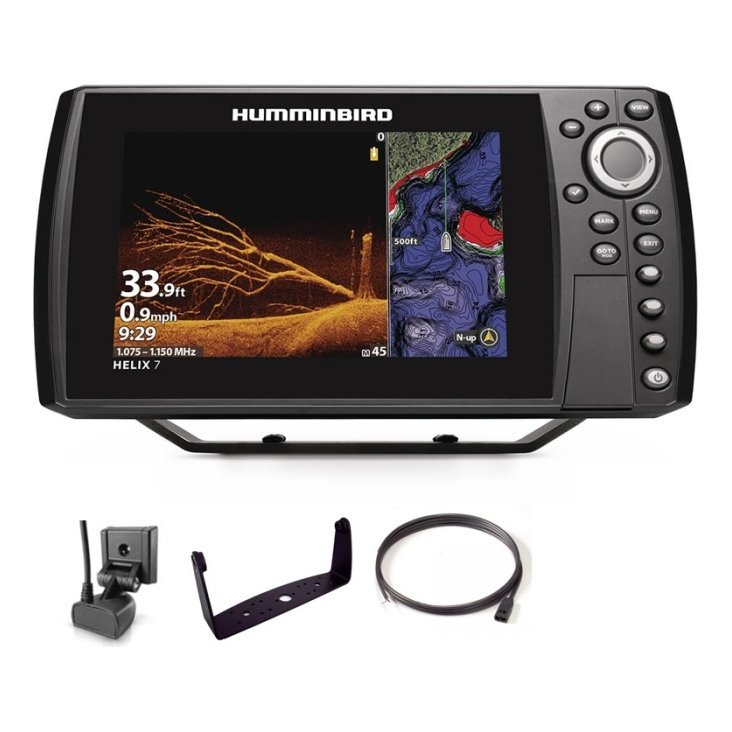
In summer, many lakes divide into layers, and a thermocline fish finder setup helps you see the one that matters most. The thermocline is a band of water where temperature drops quickly with depth, and it often shows on sonar as a thin, fuzzy line floating above the bottom. Fish and bait frequently gather above, below or right in this layer because of the oxygen and temperature differences around it. Learning to recognise it turns a screen full of mystery into a clear depth target. This guide explains what the thermocline is, how it appears on sonar, why fish use it, how to adjust your settings to see it and how to fish it effectively.
What is a thermocline?
In summer, the sun warms the surface water while deeper water stays cool. Between the two lies a transition zone where temperature changes quickly, called the thermocline.
The three layers
The warm upper layer is the epilimnion, the thermocline is the middle layer and the cool lower layer is the hypolimnion. Many lakes develop these layers in warm months, while shallow or windy lakes may not.
Why it forms
Warm water is lighter and floats over cooler, denser water. Calm, hot weather strengthens the layers, and wind and storms can mix them.
Why it matters to anglers
Oxygen levels and temperature often differ above and below the thermocline, so fish choose the layer that suits them. That makes it a useful depth to target.
How a thermocline looks on a fish finder
Sonar does not measure temperature directly, but density changes reflect sound.
A faint line or band
On many screens the thermocline shows as a thin, fuzzy, horizontal band of weak returns, often hovering between the surface and the bottom. It may look like a smear or a faint ceiling.
Bait and fish stacked near it
Baitfish often collect above or on the layer, and predators sit just below or alongside. When you see a band with marks above, it is worth a closer look.
What it is not
Do not confuse it with the bottom’s double echo or with schools of plankton. A thermocline usually extends over a large area and stays at a similar depth as you move.
Settings that help you see it
A few adjustments reveal faint layers.
Increase sensitivity carefully
Raise sensitivity a little so weak returns appear, but avoid clutter. Our fish finder settings guide explains how.
Use a suitable frequency
Lower frequencies often show layers better at depth, while higher frequencies show finer detail. Read our fish finder frequency guide.
Use a clean transducer
A well-mounted transducer shows subtle returns more clearly. See our transducer guide.
Check water temperature
If your unit reports temperature, compare it with what the sonar shows. Some anglers use a temperature probe to confirm depth.
Why a thermocline fish finder helps: how fish use the layer
Fish respond to comfort and food.
Oxygen and temperature
Below the thermocline, oxygen can be low in summer, so fish often stay above or near the layer where both temperature and oxygen suit them.
Food and ambush points
Baitfish collect along the boundary, and predators use it as an ambush level.
Seasonal changes
As autumn cools the surface, the thermocline weakens and fish spread out again. Our fall fishing with electronics guide explains the change.

How to fish the thermocline
Once you find the layer, match your presentation to it.
Determine the depth
Note the depth of the band and the depth of marks relative to it. Mark a waypoint where you see consistent activity. See our marine GPS waypoints guide.
Present at the right level
Use jigs, drop shots or trolling rigs to present lures at the depth of the fish. Vertical techniques suit suspended fish, and our vertical jigging with sonar guide explains the method.
Troll along a depth
Use GPS and sonar to hold depth and speed. Read our trolling with a fish finder guide.
Be patient with suspended fish
Fish near a layer can be selective, so vary speed and lure style until you find what triggers them.
Where to look in a lake
The layer’s depth varies across a lake.
Open water and basins
Thermoclines are often easiest to see over deep, open basins.
Points and humps
Where structure rises into the layer, fish may use the structure and the layer together.
Creek channels
Channels crossing the layer can concentrate fish. Check your chart. See our guide to summer bass fishing with sonar.
Seasonal and weather effects
Heat waves
Long hot spells strengthen layers and push fish deeper.
Storms and wind
Wind mixes water and can erase or move a thermocline.
Turnover
In autumn, cooling surface water sinks and mixes, ending stratification.
Common mistakes
- Searching for a thermocline in a shallow, mixed lake.
- Mistaking clutter for the layer.
- Fishing below low-oxygen water.
- Ignoring bait.
- Not marking productive depths.
A summer routine for finding the layer
On a hot summer day, start in the deepest part of the lake you want to fish. Drive a slow line across the basin with sensitivity slightly raised and a lower frequency selected. Watch for a faint horizontal band between the surface and the bottom, and look for bait marks stacked above or on it. When you find the layer, note its depth, mark a waypoint and switch to a shorter range with zoom so you can see fish marks clearly. Then drive to nearby structure at the same depth and repeat the check. Over a few trips, you will learn how the layer moves through the season.
Pair sonar with a temperature reading
If your unit reports temperature, compare readings at the surface and at depth. A rapid change over a few metres confirms a thermocline, and the depth tells you where to present your lure. If you do not have a temperature sensor, rely on the sonar picture and on whether bait and fish align with the layer.
Respect fish in deep, warm water
Fish caught from deep water can suffer from pressure changes and warm surface temperatures. Handle them gently, release quickly and consider switching to shallower or cooler areas when conditions are harsh.
Common questions about summer depth
Anglers often ask why fish seem to vanish in July. In many lakes, the answer is that they have moved to a comfortable layer that your lures are not reaching. A thermocline fish finder routine lets you check this quickly: if the layer is at a particular depth and fish are stacked beside it, bring your lures to that level. If you see no fish at that depth, move to structure that reaches the layer, such as humps or channel edges, because fish often use them as feeding stations.
Frequently asked questions
Can every fish finder show a thermocline?
Many can show it under the right conditions, but visibility depends on settings and water.
How deep is the thermocline?
It varies by lake and season, so check your sonar and temperature.
Do fish always hold at the thermocline?
No, but it is a common holding level in summer.
Do I need a temperature sensor?
Not essential, but it helps confirm what you see.
Use the layer to your advantage
A thermocline fish finder routine of spotting the layer, reading bait and presenting at the right depth removes much of the guesswork from summer fishing. Practise on your home water and note what you see. Browse fish finders in our shop and contact us if you want help choosing one for deeper lakes.
Related reading from Fishtrail Outfitters
- Winter Fishing With Sonar: Find Slow, Deep Fish in Cold Water
- Summer Bass Fishing With Sonar: Find Fish in the Heat
- Furuno Fish Finder Guide: What to Know Before You Buy a Furuno FCV Unit
- Side Imaging vs Down Imaging: Which Sonar View Do You Need?
- Tides for Fishing: How Tides and Currents Change Where Fish Feed
Products mentioned in this guide
- Fishfinder Garmin Striker Vivid 4CV + Sonar 77/200/455/800 KHz
- Fishfinder Garmin Striker Vivid 5CV + Sonar 77/200/455/800 KHz
- Fishfinder Garmin Striker Vivid 7CV + Sonar 77/200/455/800 KHz
Further reading: U.S. Coast Guard boating safety resources · National Weather Service marine forecasts
Questions before you buy? Contact Fishtrail Outfitters or browse the shop.