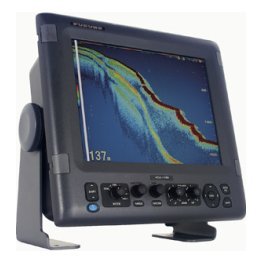
A Furuno fish finder tends to appeal to anglers who fish deeper water, run larger boats or simply want equipment from a brand with a long marine heritage. Furuno is widely known in the marine industry for navigation and fishing electronics, and its FCV fish finders are the models many anglers meet when they start looking at the brand. Because specifications and product lines change, this guide stays general. It explains who tends to choose a Furuno fish finder, what to compare on a product page, how transducers and frequencies affect results, how to match a unit to your boat and water, how to install and set it up, and how to look after it. Always check the product page for the exact model details before you buy.
Who chooses a Furuno fish finder
Anglers who fish deeper water
Deep-water fishing, whether on large lakes or offshore, rewards strong sonar and well-matched transducers. Furuno units are often considered by anglers who want to see clearly at depth.
Owners of mid-size and larger boats
Larger boats have the console space, power and budget for bigger screens and more capable systems. See our offshore fishing electronics guide for the wider picture.
Anglers who value a long-established brand
Some buyers simply prefer brands with a long record in marine electronics. That is a sensible factor, as long as the features and fit are right for you.
Understand the FCV family
A line of dedicated fish finders
FCV models are generally designed as dedicated fish finders with an emphasis on sonar performance. Check each model’s page for the screen size, sonar capabilities and supported transducers.
Different models for different boats
Model numbers differ by screen size and features, so compare carefully. Our 7 inch fish finder guide explains how to think about screen size.
Check what is included
Some listings include a transducer and others do not. Confirm this before you order. See our what is in the box guide.
Sonar and frequency considerations
Frequencies and depth
Deep water favours lower frequencies, and detail favours higher ones. Our fish finder frequency guide explains the trade-off, and many anglers choose a transducer that offers both.
CHIRP and detail
CHIRP sonar improves target separation, which helps with fish near structure and bait. See our CHIRP fish finder guide.
Transducer matching
The display and transducer must be compatible and suited to your hull and speed. Our transducer guide explains mounting options, including thru-hull and transom styles.
Compare with other brands
Furuno versus mainstream consumer brands
Lowrance, Humminbird and Garmin focus heavily on recreational anglers and often include GPS and imaging in one display. Read our Lowrance vs Humminbird guide and Garmin marine GPS guide for context.
Furuno and Simrad
Both brands appear in larger-boat setups. See our Furuno and Simrad guide.
Choose on fit
Compare specific models on screen size, sonar, transducer and total cost, not just on a brand name.

Match a model to your boat
Larger fishing boats
Look for a screen that suits your console and a transducer that suits your hull and speed. Plan for clean power. See our boat wiring basics.
Deep lakes and coastal water
Choose a unit and transducer with good depth capability. Think about how you will mount the transducer in waves.
Smaller boats
A compact, simple fish finder may serve you better. See our marine electronics for small boats guide.
Install and set up
Plan the installation
Decide where the display and transducer will go before you drill. Our fish finder installation guide and marine electronics setup guide explain the steps.
Power and wiring
Use a fused, dedicated supply and route cables carefully to avoid noise.
First-time configuration
Set units, transducer type and basic sonar settings. Our fish finder settings guide explains the main controls.
Test at speed
Check that depth stays stable at cruising speed and adjust the transducer if needed.
Use it well
Learn the screen
Spend time reading it on familiar water. Our how to read a fish finder guide helps.
Mark productive spots
If you pair it with a chartplotter or GPS, mark spots with waypoints. See our marine GPS waypoints guide.
Keep it maintained
Rinse after salt use and inspect connectors. See our maintenance guide.
Common mistakes
- Buying without checking the transducer.
- Choosing too large a screen for the helm.
- Ignoring power and wiring quality.
- Using default settings in deep water.
- Skipping maintenance in saltwater.

Planning a system around a dedicated fish finder
On larger boats, anglers often separate sonar and navigation. A dedicated fish finder handles sonar, while a chartplotter handles charts, routes and safety. This split gives each device a full screen, provides redundancy and lets you choose the best tool for each job. The cost is more space, more wiring and sometimes a need to coordinate settings. If you go this route, make sure the two devices share power cleanly, and plan the console so you can see both without leaning. Our chartplotter buying guide and combo guide explain how to decide between separate and combined units.
Think about networking only if you will use it
Networking lets devices share data, but it adds complexity. If your fish finder and chartplotter come from the same brand or support the same network, linking them can be valuable. If not, running them independently is perfectly acceptable, and many boats do exactly that.
Keep notes on your configuration
Write down model numbers, software versions, wiring routes and your favourite settings. If something fails or you upgrade later, these notes save time and money, and they help anyone you ask for advice understand your setup quickly.
Care for deep-water gear
Deep-water trips are often long, so check the system before you leave. Test the sonar at the dock, confirm the transducer is clean and clear of the water line when the boat is on the trailer, and verify the battery state. After each trip, rinse and dry, and look for corrosion on connectors. Update software at home rather than on the water. A disciplined routine keeps a premium fish finder performing at its best for many seasons.
Frequently asked questions
Is a Furuno fish finder good for beginners?
It can be, but it may be more than a small-boat beginner needs. Compare it with simpler options.
Does a Furuno fish finder include GPS?
It depends on the model, so check the product page.
Can I use it in saltwater?
Check the model details and rinse after every trip.
Do I need a separate chartplotter?
Many anglers pair a dedicated fish finder with a chartplotter on larger boats.
Choose with your boat in mind
A Furuno fish finder can be a strong choice for deeper water and larger boats. Compare models, check the transducer and plan your installation carefully. Browse Furuno units in our shop and contact us if you would like help choosing a model for your boat.
Related reading from Fishtrail Outfitters
- Thermocline Fish Finder Guide: How to Spot the Thermocline and Catch Fish
- Winter Fishing With Sonar: Find Slow, Deep Fish in Cold Water
- Fish Finder Chartplotter Combo: Is an All-in-One Unit Right for You?
- Furuno Marine Electronics and Simrad: What Anglers Should Know
Products mentioned in this guide
Further reading: Take Me Fishing: how to get started and where to fish
Questions before you buy? Contact Fishtrail Outfitters or browse the shop.