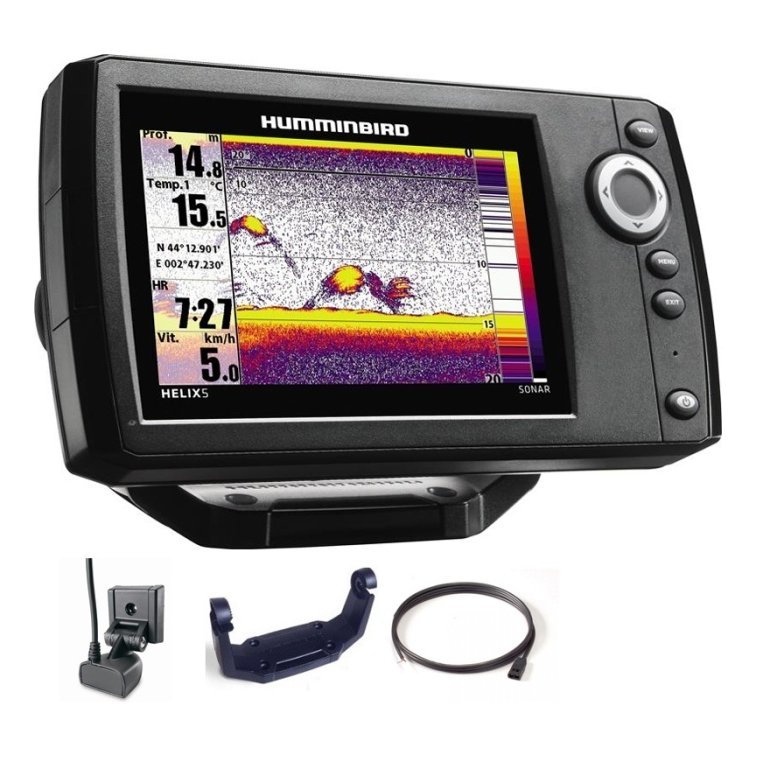
A fish finder with GPS does two jobs at once: it shows you what is under the boat and it tells you exactly where the boat is. That pairing is why GPS-equipped fish finders have become the default choice for anglers who return to the same productive spots, travel across big water or simply want to find their way back to the ramp with confidence. This guide explains what GPS adds to a fish finder, what features to compare, how to use waypoints and tracks, and how to decide whether a combo unit is the right fit for your boat and budget.

What GPS adds to a fish finder
A plain fish finder reports what the sonar sees right now. GPS adds location, so the unit can remember where things happened and show you where you are in relation to them.
Waypoints
A waypoint is a saved location. Mark a brush pile, a rocky point, a school of bait or a hazard and you can navigate back to it later with a few presses.
Tracks and trails
Many units draw a trail showing where you have been. That trail is a record of the path you drove, which helps you repeat a productive drift or retrace your route in poor visibility.
Speed and heading
GPS provides accurate speed over ground and heading. Trolling anglers use speed readouts to hold precise lure speeds, which is a major advantage over guessing from engine settings.
Why anglers choose a fish finder with GPS
The benefits go beyond convenience.
Repeatable success
Fishing is largely about returning to what works. GPS makes your best spots repeatable season after season instead of relying on memory and landmarks.
Safer navigation
Knowing your position helps you avoid hazards and find the ramp when weather closes in. See our boat navigation safety basics for more on using electronics to stay safe.
Better searching
With a trail on screen you can see which water you have covered and which you have not. That stops you fishing the same patch twice by accident.
Key features to compare
Not all GPS fish finders are equal. A few features make the biggest difference to everyday use.
Built-in maps and charts
Some units include basic base maps and others support detailed charts. If you fish large lakes or coastal water, detailed charts add real value. For small waters, a basic map may be enough.
Screen size and readability
The map and sonar both need space. A larger screen makes split views practical, while a compact screen suits a kayak or small boat.
Waypoint capacity and organisation
Look at how easily the unit lets you name, group and edit waypoints. A tidy system saves frustration after a busy season.
Sonar type
Check whether the unit offers CHIRP, down imaging or side imaging. You can read more in our articles on CHIRP fish finders and imaging sonar.
Transducer included
Confirm which transducer comes in the box and how it mounts. The best display is limited by a transducer that does not suit your boat.
Combo units versus separate devices
Some anglers run a fish finder and a separate GPS or chartplotter. Others choose a combo.
Advantages of a combo
A combo unit uses one screen, one power connection and one set of controls. It is simpler, cheaper and takes less console space.
When separate units make sense
On larger boats, separate devices give you more screen space and a backup if one fails. Read our guide on fish finder chartplotter combos to weigh the options.

Using waypoints well
The value of a GPS fish finder depends on the habits you build around it.
Name waypoints clearly
Use short, consistent names that tell you what the spot is and what you found there. Something like a type, a depth and a month is enough.
Mark hazards as well as hot spots
Rocks, stumps and shallow bars are as worth marking as brush piles. It protects your boat and your lower unit.
Back up your data
Save your waypoints to a card or export them regularly. Losing years of marks to a failed unit is a painful experience.
Review after each trip
Spend five minutes at home deleting weak waypoints and tidying names. A clean list is easier to use on the water.
Setting up a GPS fish finder
A good setup is quick and pays off every trip.
Place the GPS antenna well
Built-in antennas work best with a clear view of the sky. Mount the display where its antenna is not shadowed by a canopy or console.
Check power and fusing
A stable 12-volt supply protects both the sonar and the GPS. Read our guide to boat wiring basics for tips.
Update software and charts
Keep firmware and charts current so you benefit from fixes and new features.
Using GPS with sonar on the water
The real power of a fish finder with GPS comes from combining both.
Find, mark, return
Run your sonar over structure, press the mark button when you see something promising and return to fish it properly.
Plan a route
If your unit supports routes, plan the path to a distant spot before leaving the dock. It reduces stress and fuel use.
Learn the water over time
Over a season your waypoints and tracks become a personal map of the lake or coast. Pair it with our guide to planning a fishing trip with GPS.
Handheld GPS and phones: are they enough?
A handheld GPS or a phone can mark waypoints, but they lack a sonar view and are harder to read on a moving boat. They make a good backup. For serious fishing, a fish finder with GPS integrates everything in one weather-resistant screen.

How to choose the right fish finder with GPS
Ask yourself a few direct questions before buying.
- What size is my boat and how much console space do I have?
- Do I fish large water that needs detailed charts?
- How important is imaging sonar to the way I fish?
- What budget do I have for the unit, transducer and installation?
Browse GPS-equipped fish finders from brands such as Lowrance, Humminbird, Garmin and Furuno in our shop and compare product pages side by side.
Choosing by boat type
The right GPS fish finder looks different on a kayak than on a bass boat, so it helps to think about your craft first.
Kayaks and canoes
On a kayak, space and power are tight. Look for a compact, low-draw unit with built-in GPS so you can mark spots without carrying a second device. Waterproof connections and a secure, low-profile mount matter more than screen size.
Jon boats and small aluminium boats
Small flat-bottom boats often run a single battery and a simple console. A mid-size GPS fish finder with a transom transducer is a practical balance of cost and capability. Our jon boat guide goes into more detail.
Pontoons and family boats
Pontoons give you plenty of console space and stable platforms, so a larger screen with a map and sonar side by side works well. Because the boat is used for general cruising too, the GPS also helps with navigation and safety.
Getting more value from your GPS fish finder
Owning the unit is only the start. A few habits turn it into a genuine fishing tool.
Keep a simple fishing journal that matches your waypoints to dates, conditions and what you caught. Over time you will see patterns, such as which spots produce in spring and which fade in summer. Our guide to keeping a fishing journal with GPS and photos shows an easy way to do this.
Update your charts and software before the season starts rather than on the ramp. New releases often fix small bugs and improve map detail, and checking them at home saves time. Finally, practise on calm days so that when conditions get tricky you already know how to find the menu, drop a waypoint and start navigation without hunting through settings.
Mind the batteries and the weather
GPS and sonar together draw more power than sonar alone, so check your battery before long days and carry a spare if you can. Keep the unit out of pooling water and rinse it with fresh water after salt exposure. A well-cared-for GPS fish finder stays accurate, and a charged battery means your waypoints and navigation are there when you need them most.
Frequently asked questions
Is a fish finder with GPS worth the extra cost?
For most anglers, yes. The ability to save and return to spots usually pays for itself in time on the water.
Do I need charts as well as GPS?
Charts add detail and safety, especially on large water. Smaller lakes may not need them.
Can GPS help me troll?
Yes. Speed over ground and a visible trail help you keep consistent lure speed and repeat productive passes.
How accurate is GPS on a fish finder?
Typically accurate enough to return to a spot within a short distance, though accuracy varies with conditions and equipment.
Bringing it together
A fish finder with GPS turns passing observations into lasting knowledge. You find structure with sonar, save it with a waypoint and return when conditions are right. That cycle is the heart of consistent fishing. Explore fish finders with GPS in our shop, or get in touch for help matching a unit to your boat.
Related reading from Fishtrail Outfitters
- Fish Finder Chartplotter Combo: Is an All-in-One Unit Right for You?
- Marine GPS Waypoints for Fishing: How to Mark, Name and Use Them
- Why Anglers Choose Fishtrail Outfitters: A Marine Electronics Store USA Anglers Trust
- CHIRP Fish Finder Explained: How CHIRP Sonar Works and Why It Matters
Products mentioned in this guide
- Fishfinder Furuno FCV 600
- Fishfinder Furuno FCV 800
- Lowrance Eagle 5 CHIRP Splitshot Gps Fishfinder + 455/800 KHz Transducer
Further reading: U.S. Coast Guard Navigation Center · Take Me Fishing: how to get started and where to fish
Questions before you buy? Contact Fishtrail Outfitters or browse the shop.