A portable fish finder gives anglers sonar without a permanent installation. Instead of drilling holes, running cables and committing to a single boat, you pack a transducer and a display into a bag and take them wherever you fish. That freedom suits kayak anglers, shore anglers, people who fish from rental boats and anyone who owns several craft. But portable does not mean simple, and the different designs behave very differently on the water. This guide explains the main portable fish finder types, how each is powered and mounted, what trade-offs to expect and how to get a clear, reliable reading from your first outing.
What counts as a portable fish finder?
The term covers several designs. What they share is that you can set them up in minutes and remove them just as quickly.
Portable kits
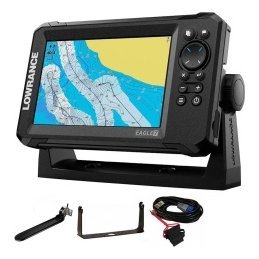
A portable kit usually includes a display, a transducer on a cable, a battery pack and a carry case. It is a fully functional sonar that simply is not permanently fixed to a boat.
Handheld and compact units
Some fish finders are built small enough to hold. They often combine the display and the electronics in one tough housing and attach to the transducer by cable.
Castable and wireless sonar
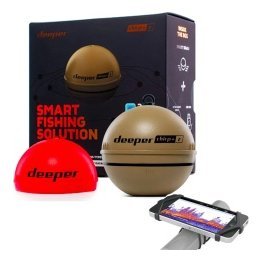
Castable devices float on the water and send sonar data to your phone or a handheld display. They are a favourite of shore anglers and ice anglers. Our Deeper sonar guide looks at this style of device.
Who benefits most from a portable fish finder
Not everyone needs a fixed installation. Portable units fit certain anglers perfectly.
Kayak and canoe anglers
Weight, space and flexibility matter on paddle craft. A portable kit lets you remove the electronics when you are not fishing. See our kayak fish finder guide.
Shore and bank anglers
Castable and wireless devices let you scan the water from the bank, reading depth and structure beyond where you can cast.
Renters and borrowers
If you fish from rented or borrowed boats, you can bring your own sonar and fit it in minutes with a suction cup or clamp.
Ice anglers
Compact sonar units are widely used through the ice. Read our ice fishing fish finder guide for details.
Key features to compare
A portable unit has to balance capability against size and power.
Screen size and readability
A small screen is easier to carry and mount, but make sure it stays readable in sun. Brightness and contrast matter more than raw size.
Battery life
Check how long the unit runs on a charge and whether you can swap or recharge it in the field. A portable unit with a dead battery is a paperweight.
Transducer type and attachment
Look at how the transducer attaches. Suction cups, clamps, floats and arms all behave differently. Choose the one that suits your craft.
GPS and mapping
Some portable units include GPS for waypoints. If you want to mark spots, check for it. See our guide to a fish finder with GPS.
Sonar technology
Many portable units offer CHIRP or detailed 2D sonar. Our CHIRP fish finder article explains what to look for.
How to set up a portable fish finder
Setup is quick, but a few details determine how well it works.
Charge everything before you leave
Charge the display, battery and any wireless components the night before. Pack a spare cable if you can.
Position the transducer in clean water
On a boat, mount the transducer on a clamp or arm where water flows smoothly. A suction cup can work on a smooth, clean hull but may lose grip at speed, so use it at low speeds only.
Keep the cable tidy
Route it so it will not snag lines or paddles, and use a clip to hold it in place.
Test before you launch
Check that the unit reads depth in shallow water near the launch. If it does not, fix the problem on the bank, not in the middle of the lake.

Using a portable fish finder from the shore
Shore fishing is a growing use for portable sonar.
Cast, scan and read
With a castable device you cast it out, let it float and receive data on your phone or display. Reel it in slowly to scan a line across the water.
Find where the bottom changes
Look for drop-offs, weed beds and holes where fish may gather. Mark them if your unit allows it.
Limitations to remember
Range depends on your signal, and wind and waves can disrupt readings. Treat the picture as a guide, not an exact map.
Limitations of portable fish finders
Portable devices are brilliant for flexibility but come with compromises.
- Suction-cup transducers can lose contact at speed or in rough water.
- Battery life may be shorter than a boat-mounted system.
- Small screens show less detail than larger permanent units.
- Setup takes time on every trip.
These are manageable if you plan for them. For many anglers the flexibility far outweighs the limits.
Tips for better readings
Stay slow
Portable systems work best at modest speeds. Go slow enough for the transducer to maintain contact and the sonar to build a clear picture.
Keep the transducer clean
Wipe the face before each trip to remove dirt or oils that block the signal.
Learn your screen
Spend a short session reading the display in shallow water near a known bottom, so you learn how marks look. Our guide to reading a fish finder can help.
Care and storage
Treat your portable kit as the electronic device it is.
- Rinse after salt use and dry before storage.
- Store batteries according to the manufacturer’s advice.
- Avoid leaving the kit in hot cars.
- Keep it in a padded case to protect the screen and cable.

Comparing portable options side by side
Because portable sonar comes in so many shapes, a simple comparison helps you shortlist the right one before you open a product page.
Kit with a separate display
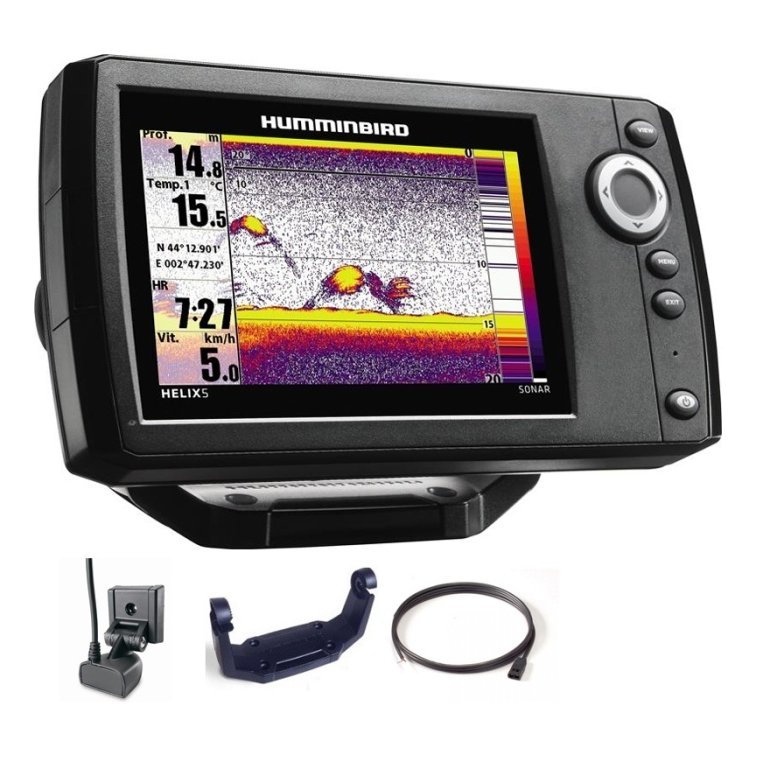
This is the closest to a fixed installation. You get a proper screen and a transducer on a cable, which gives a familiar view and good detail. The trade-off is the amount of gear to carry and the time needed to set it up. It suits kayak and rental-boat anglers who want a full sonar picture.
Compact all-in-one handheld
These pack the display and electronics together, so there is less to assemble. They are convenient for quick trips and for ice fishing, though the screen is small and the battery is built in, so plan your charging.
Wireless castable device
These are the lightest and cheapest way to scan water from the bank, and they use your phone for the display. Phone brightness and battery become part of the system, so bring a power bank on long days.
A short pre-trip routine
A routine saves you from discovering problems on the water. The night before, charge all devices and pack cables, clamps and a small towel. On arrival, check that the transducer face is clean and that the clamp or suction cup holds firmly. Switch the unit on near the launch, confirm a stable depth reading and set the display to automatic range. After fishing, rinse everything with fresh water, let it dry fully and store it in a padded case. This small habit extends the life of your gear and keeps readings reliable from one trip to the next.
When to upgrade to a permanent setup
Portable sonar is a great starting point, but some anglers eventually want something fixed. If you fish from the same boat every weekend, find yourself rebuilding the setup each trip or want a larger screen with maps, a permanent installation becomes appealing. The experience you gain from portable sonar is not wasted: you will already know what features you use, which transducer position works and how much screen you really need. Many anglers keep a portable kit as a backup or for a second boat, so the original purchase continues to earn its keep.
Frequently asked questions
Can a portable fish finder work in saltwater?
Many can, but check the product details and rinse everything with fresh water afterwards.
How deep can a portable fish finder read?
It depends on the unit and the transducer, so check the product page for your intended water.
Are portable fish finders accurate?
They can be very accurate when set up correctly, though conditions and mounting affect results.
Do portable units need a phone?
Some do and some do not. Wireless devices typically use a phone or tablet as their display.
Choosing the right portable fish finder
The best portable fish finder is the one that suits your craft, your water and your patience for setup. Decide where you will use it, how it will be powered and how much detail you need, then match those answers to a unit. Browse portable and compact fish finders in our shop, or ask us for help matching a kit to your kayak, small boat or shore fishing.
Related reading from Fishtrail Outfitters
- Deeper Sonar Guide: Castable Fish Finders for Shore, Kayak and Ice
- Kayak Fish Finder Guide: How to Choose and Mount One on a Kayak
- CHIRP Fish Finder Explained: How CHIRP Sonar Works and Why It Matters
- Ice Fishing Fish Finder Guide: Choose, Set Up and Read Sonar Through Ice
Products mentioned in this guide
- Deeper Start Portable Fishfinder
- Fishfinder Garmin Striker Vivid 4CV + Sonar 77/200/455/800 KHz
- Fishfinder Garmin Striker Vivid 5CV + Sonar 77/200/455/800 KHz
Further reading: Take Me Fishing: how to get started and where to fish
Questions before you buy? Contact Fishtrail Outfitters or browse the shop.