Floating cases and handles for GoPro cameras add buoyancy and a bright colour, so a dropped camera bobs on the surface instead of sinking to the bottom. Every angler who films on the water eventually watches a camera slip from a hand, a mount or a wet deck, and the difference between a bad moment and a ruined day is whether it floats. These accessories also give you a better grip with wet hands, and many double as a pole or grip for filming from the boat. This guide explains how floating gear works, which designs suit different kinds of fishing, how to combine floats with tethers, how to check buoyancy before a trip, how to maintain them, and what to do if a camera does go overboard.
Why camera floatation matters
A small camera has little mass, but it still sinks quickly if it is heavy for its size or has a metal case. Once it sinks in deep water, it is gone along with every clip on the card. Spray, slippery hands and crowded decks make accidents common, especially on kayaks and small boats. Floating gear is a low-cost way to avoid a high-cost mistake, and it takes only seconds to fit.
Brightly coloured floats are easier to find
Many floating handles are orange, yellow or red so they show up against dark water and waves. In choppy water that colour can be the difference between recovering a camera and watching it vanish.
Floating gear improves grip
Textured grips help you hold the camera with wet or cold hands, which reduces the chance of dropping it in the first place.
How floating cases and handles work
Floating gear uses foam or air chambers to provide enough buoyancy to hold the camera and its mount at the surface. Handles may be solid foam with a threaded mount, while cases may use buoyant walls. The total buoyancy must be greater than the weight of the camera, case and any attachments. If you add a power bank or extra accessories, check that the float is still enough.
Handle designs
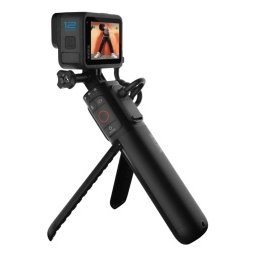
Simple handles give grip and a mounting point. Some include a wrist strap or a place for a tether. Pole-style handles extend your reach for filming from above the water.
Case designs
Floating cases combine waterproof protection with buoyancy, and some add a lens guard. Compare them with the options in our waterproof case guide.
Choose floating cases and handles for GoPro that suit your fishing
What you need depends on where you fish. On a kayak, a compact float that does not catch lines is ideal. On a larger boat, a longer handle can help with filming over the side. For shore fishing, a handle with a strap helps when casting or wading. Choose gear that is comfortable in your hand and fits your camera and mount system. See our GoPro boat mount guide and GoPro kayak fishing guide for mount ideas.
Check compatibility
Make sure the float fits your camera model and accepts your mounts. Some floats cover buttons or ports, so check access to controls and charging.
Consider weight and size
A big float is secure but awkward on a kayak. Choose a design that balances buoyancy with convenience.
Combine floats with tethers
A float helps you find a camera, but a tether keeps it from leaving in the first place. Use a short line from the handle or case to a fixed point or to your wrist, and choose a tether that does not tangle with fishing lines. Our saltwater protection guide explains how to protect gear on the water, and our solo fishing safety guide explains why you should avoid leaning far over the side to retrieve anything.
Do not tether to your body unsafely
Avoid any tether that could drag you into the water or snag in a capsize. A quick-release or breakaway design is safer.
Test buoyancy before the trip
Test floating gear in a bath, a pool or shallow water with the camera in place. Check that it floats with the lens upward or sideways, and that it does not tip so that water covers the lens or ports. If you use a power handle or extra accessories, test with those attached. Repeat the test whenever you change your set-up.
Check seals and latches
Floating cases still need good seals. Inspect them before each trip as described in our saltwater protection guide.
Care and maintenance
Rinse floating gear with fresh water after use, especially in saltwater, and let it dry. Check foam for cracks, compression or waterlogging, because damaged foam loses buoyancy. Clean threads and mounting points so screws do not seize. Store gear out of direct sun and heat, as extreme temperatures can damage foam and plastics.
Replace worn parts
If a float is cracked or waterlogged, replace it rather than rely on it.
If the camera goes overboard
Stay calm and put safety first. Mark the location, note the direction of drift and wind, and only retrieve the camera if you can do so safely. Do not lean far over the side or swim in cold or rough water to save a camera. If the camera floats, it may be recoverable with a net or pole. If it sinks, accept the loss and learn from it, perhaps adding a tether next time.
Combine with other accessories
Floating gear works well with mounts, power handles and chest harnesses. Check how they combine, and avoid stacking so much equipment that the camera becomes unwieldy. See our power handle guide and GoPro chest mount guide.
Common mistakes
- Assuming a camera floats without testing it.
- Using a float with no tether.
- Adding heavy accessories that overwhelm buoyancy.
- Ignoring cracked or waterlogged foam.
- Leaning dangerously over the side.
Build a simple overboard plan
Think about what you will do before something falls, because decisions are harder in the moment. Decide who watches the camera while someone else manoeuvres the boat, keep a landing net or pole within reach, and agree that nobody leaves the vessel to retrieve gear. On a kayak, practise reaching for a floating handle from a seated position without tipping. Write down the rule that safety comes before footage and stick to it. A short briefing with your fishing partner takes less than a minute and can prevent a far worse accident than a lost camera.
Add a bright wrist strap
A contrasting strap or reflective tape on a float makes it easier to spot in waves or low light. It is a cheap upgrade that also helps you find a camera that has been set down on the deck.
Keep a spare camera plan
If you rely on one camera for important footage, carry a small backup such as a phone in a waterproof pouch. See our GoPro vs smartphone guide for how the two compare.
Frequently asked questions
Do all GoPro cameras float?
Not by themselves. Check your model, and use floating gear when in doubt.
Are floating handles good for kayak fishing?
Yes, if they are compact and do not catch lines.
Can I use a tether and a float together?
Yes, and it is the safest approach.
How often should I check my floating gear?
Before each trip and after any hard impact.
Keep your footage afloat
Floating cases and handles for GoPro cameras are a simple, affordable way to protect your camera and your footage. Test buoyancy, add a tether and look after the gear. Browse camera accessories in our shop and contact us if you would like help choosing a set-up for your boat or kayak.
Related reading from Fishtrail Outfitters
- GoPro Fishing Accessories: The Essential Kit for Anglers
- GoPro Kayak Fishing Setup: Mounts, Tethers and Camera Angles
- Waterproof Cases for GoPro: When You Need One and How to Choose
- GoPro Battery Tips: Keep Your Camera Recording All Day on the Water
Products mentioned in this guide
- GoPro HERO11 Black Mini floating camera case
- Volta handle for GoPro camera with power supply
- Handle for GoPro camera with tripod
Further reading: GoPro official website · Take Me Fishing: how to get started and where to fish
Questions before you buy? Contact Fishtrail Outfitters or browse the shop.