When anglers ask whether to film with an action camera or a phone, the GoPro vs smartphone debate usually comes down to durability, mounting and convenience rather than raw image quality. Modern phones shoot superb video, and you already own one. But they are expensive, fragile and not designed for spray, drops and rough decks, while action cameras are small, waterproof and built to be strapped to almost anything. This guide compares the two across durability, waterproofing, stabilisation, battery life, mounting options, audio, ease of use and cost, then explains when each is the better choice and how to use both together for the best footage with the least risk to your phone.
GoPro vs smartphone: the short answer
If you fish in calm, dry conditions and want quick clips, a phone is fine. If you fish in spray, rain, rough water or from a kayak, or you want mounted first-person footage, an action camera is usually the better tool. Many anglers use both: a phone for quick photos and social posts, and an action camera for mounted or in-water footage.
Think about risk
A phone holds your contacts, maps, payment apps and emergency calls. Losing it overboard is much worse than losing a camera.
Durability and waterproofing
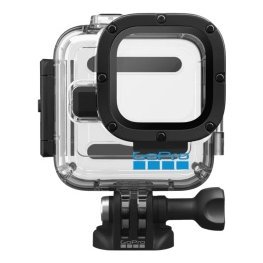
Action cameras are built to handle drops, knocks and water, and many are waterproof without a case. Phones vary, and even water-resistant models are not designed for repeated saltwater exposure or being dropped on a hard deck. Cases for phones add protection but also bulk. For serious saltwater use, action cameras have a clear advantage. See our waterproof case guide and saltwater protection guide for how to care for cameras.
Heat and cold
Phones can overheat in direct sun and shut down, and their batteries drain quickly in cold weather. Action cameras are more tolerant but still need care.
Video quality and stabilisation
Both produce excellent video in good light. Phones often have larger sensors and clever processing, especially for photos and low light. Action cameras use wide lenses and strong stabilisation that smooths shaky boat footage, especially for mounted or handheld shots. The wide view is a real advantage in tight spaces such as kayaks. Check our GoPro settings for fishing guide to get the best footage from an action camera.
Slow motion and time lapse
Both can record slow motion and time lapse. See our slow-motion fishing video guide and time lapse guide.
Low light
Phones often win at dawn and dusk because of larger sensors and processing. Action cameras do better in bright daylight.
Mounting and angles
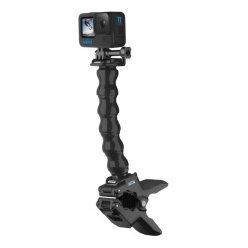
Action cameras shine here. Small mounts, clamps and harnesses let you place a camera on a rail, a rod, a helmet or your chest. Phones need bulkier holders and are harder to mount safely. See our GoPro boat mount guide, GoPro chest mount guide and GoPro kayak fishing guide for ideas. If you want multiple camera angles, action cameras are far cheaper to risk.

Battery life and storage
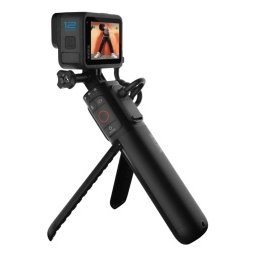
Phones have large batteries, but they also run apps, GPS and screen time, so recording can drain them quickly. Action cameras have small batteries but are easy to swap or power externally, as in our power handle guide and GoPro battery tips. Storage on phones is shared with photos and apps, whereas action cameras use dedicated cards. See our memory card guide.
Audio
Both capture decent sound, but wind noise is a common problem. Phones can handle voice well in calm conditions. Action cameras usually have wind-reduction features. For voice-over, record separately in a quiet place. See our guide to editing fishing videos.
Ease of use
Phones are familiar, and the screen is large and easy to use. Action cameras have smaller screens, but they are simple to start with a button, a remote or voice commands, as explained in our voice control guide. For hands-free recording on a boat, action cameras are often easier.
Cost
You already have a phone, so recording with it costs nothing extra, apart from a case or holder. An action camera is an extra purchase, but it protects your phone from risk and opens up more angles. Consider the cost of replacing a lost phone compared with the price of a camera.
Which should you choose?
- Choose a phone for casual clips, photos and calm weather.
- Choose an action camera for spray, kayaks, mounted footage and rough use.
- Use both if you want quick posts and high-quality action.
A combined set-up
Mount an action camera for continuous footage, and use your phone for photos of the catch, notes and navigation. See our photographing your catch responsibly guide for tips.
Safety first
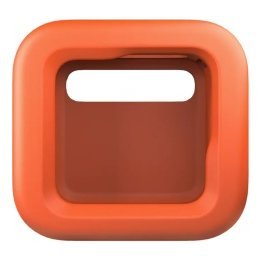
Never risk safety for a shot, and keep your phone secure and dry. A floating case or tether helps with either device. See our floating cases and handles guide and solo fishing safety guide.
Common mistakes
- Using a phone in heavy spray without protection.
- Forgetting that a phone is also your emergency tool.
- Underestimating battery drain.
- Poor mounting that drops the device.
- Ignoring audio and wind noise.
Real-world scenarios
Consider three anglers. The first fishes a calm pond on weekends and wants photos of catches to share with family. A phone in a basic case meets all those needs. The second fishes a kayak on open water and wants mounted footage of strikes and landings, plus scenery. An action camera on a track mount, with a tether and floating handle, is the better choice, and the phone stays safely in a dry bag. The third runs a charter or a tournament boat and wants multiple angles at once. Several action cameras provide wide shots and close-ups, while a phone handles live updates and photos. Matching tools to the situation gives better results than arguing over a single winner.
Think about your editing workflow
Footage needs to reach your editor. Phones make sharing easy because the footage is already on the device, while action cameras need a card reader or app. Consider how you will review and edit before you decide.
Upgrade gradually
You do not need to buy everything at once. Start with your phone, learn what shots you want, then add an action camera and mounts as your needs grow.
Frequently asked questions
Is a GoPro better than a phone for fishing?
For rough, wet conditions and mounted footage, usually yes. For casual use, a phone may be enough.
Can I use a phone underwater?
Only if it is rated for it, and even then saltwater and impacts are risks.
Do I need both?
Not necessarily, but using both gives flexibility.
Which is cheaper?
A phone you already own costs nothing extra, but an action camera protects your phone.
Choose the camera that fits your fishing
The GoPro vs smartphone choice depends on where and how you fish, and the best answer is often to use each for what it does best. Protect your phone, mount an action camera where it can do its job, and enjoy your footage. Browse camera accessories in our shop and contact us if you would like help choosing a set-up.
Related reading from Fishtrail Outfitters
- Best GoPro for Fishing: What to Look For and How to Set It Up
- Underwater Fishing Camera Guide: How to Film Below the Surface with a GoPro
- GoPro Boat Mount Guide: Where to Attach Your Camera for Great Fishing Video
- Fishing Video Tips: How to Film Better Catches, Trips and Highlights
Products mentioned in this guide
- Waterproof case for GoPro HERO11 Black Mini camera
- Waterproof case for GoPro HERO12 Black HERO11 Black HERO10 Black HERO9 Black camera
- Magnetic swivel GoPro camera clip
Further reading: GoPro official website · Take Me Fishing: how to get started and where to fish
Questions before you buy? Contact Fishtrail Outfitters or browse the shop.