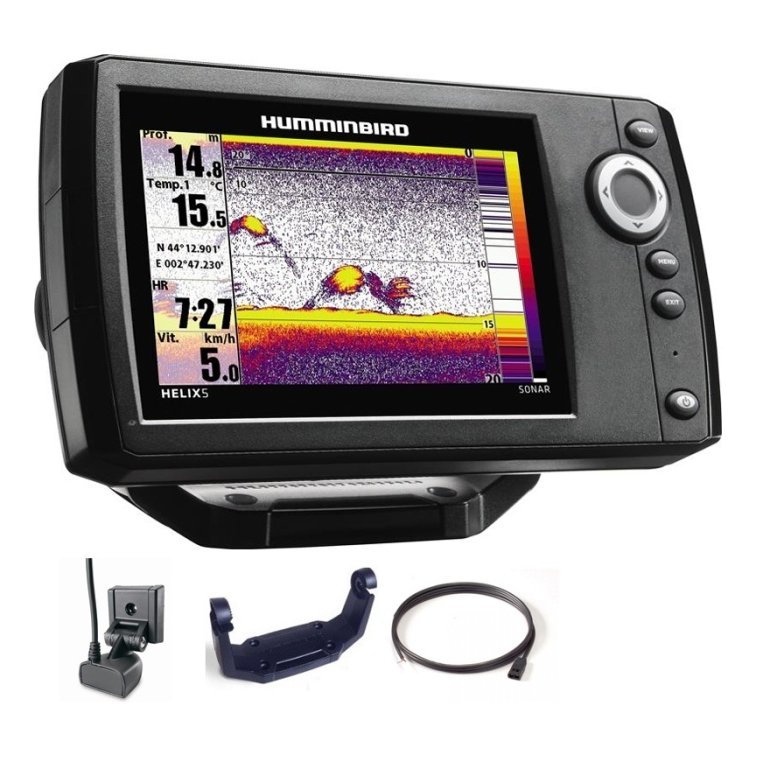
If you have ever stared at a sonar screen and wondered how does a fish finder work, the answer is both simple and clever. A fish finder sends short pulses of sound into the water, listens for the echoes that bounce back from the bottom, from fish and from anything else in the way, and turns the timing and strength of those echoes into a picture that scrolls across the screen. Understanding the basics makes you better at reading the picture, choosing settings and spotting problems. This guide explains the parts of a fish finder, how sound travels in water, how echoes become marks, why frequency, cone angle and the transducer matter and how GPS and imaging add to the story, all in plain language and with no maths.

How does a fish finder work? The basic idea: sound and echoes
Sound travels well in water
Sound moves faster and farther in water than in air, which is why sonar works so well for finding things under the surface. Light fades quickly in water, but sound can travel long distances.
Timing gives distance
The unit sends a pulse and measures how long the echo takes to return. Because the speed of sound in water is known, that time tells the unit how far away the object is. A short time means a shallow object, and a longer time means a deeper one.
Strength gives clues about the target
The strength of the echo depends on the size, density and type of the object. A hard bottom returns a strong echo, while a soft one returns a weaker echo, and a small fish returns less than a large one. The screen shows these differences as colour or thickness.
The parts of a fish finder
The transducer
The transducer sits in the water and converts electrical signals into sound pulses, then converts returning echoes back into electrical signals. It is the part that touches the water, and its position matters. Our transducer guide explains the types and mounting.
The control unit and processor
The processor controls the pulses, receives the signals and calculates depth and signal strength. It also applies filters and settings such as sensitivity.
The display
The display draws the picture. Newer units use bright colour screens with high resolution, and many show sonar, maps and other data together.
Power and cables
A stable power supply and good cables keep the signal clean. Our boat wiring basics guide covers this.
How the picture is built
A scrolling history
Each pulse and echo produces a thin vertical line of information. The screen shows many of these lines side by side, with the newest on the right. As the boat moves, the picture scrolls left, creating a history of what you passed over.
Depth on the vertical axis
Near the top is the surface, and the bottom of the picture is the deepest part of the range. The bottom appears as a thick band, and anything above it is in the water column.
Marks become arches
When a fish passes through the cone, the echo grows stronger as it nears the centre and weaker as it leaves, drawing an arch. Our how to read a fish finder guide explains arches and other marks.
Frequency and cone angle
Frequency
Lower frequencies reach deeper but show less detail, and higher frequencies show finer detail but reach less deep. Our fish finder frequency guide explains the trade-off.
Cone angle
Sound spreads as a cone, so the area covered grows with depth. A wide cone covers more but shows less detail per target, and a narrow cone does the reverse.
CHIRP
CHIRP sonar sweeps through a range of frequencies in each pulse, which gives better separation between targets. Our CHIRP fish finder guide explains it.

Imaging and GPS
Down imaging and side imaging
Imaging uses narrow beams to draw picture-like views of the bottom and structure. Our side imaging vs down imaging guide explains the differences.
GPS
GPS adds position, so the unit can mark waypoints, draw tracks and show speed. Our fish finder with GPS guide describes the benefits.
Charts
Charts show depth contours and landmarks, which helps you plan where to use sonar.
What affects the picture
Transducer position
Bubbles and turbulence disrupt sound. A well-mounted transducer gives a clean picture.
Water conditions
Temperature layers, suspended particles and salt content affect how sound travels. Our thermocline guide and freshwater vs saltwater guide explain more.
Electrical noise
Interference from engines and other electronics adds speckles to the screen. Good wiring reduces it.
Settings
Sensitivity, range and noise rejection change how the picture looks. See our fish finder settings guide.
What a fish finder cannot do
It does not identify species
Sonar shows marks, not species. Size and behaviour give clues, but you still need experience.
It does not show everything
Fish outside the cone, or very close to the bottom or structure, may not appear.
It is a tool, not a guarantee
A fish finder improves your information, but you still need to choose where and how to fish.
Common misconceptions
- A fish finder does not attract fish.
- A bigger screen does not always mean better sonar.
- Every fish does not look like an arch.
- Sonar does not need to be expensive to be useful.

A simple demonstration to build intuition
Here is a mental experiment that helps. Imagine standing on a dock and clapping your hands near a cliff across a quiet valley. You hear an echo a moment later, and from the delay you can tell how far away the cliff is. If you shouted at a patch of bushes, the echo would be softer. A fish finder does the same with sound underwater, but much faster and many times per second. The bottom is the cliff, fish are the bushes and the screen draws what the echoes tell it. Thinking this way makes sense of why hard bottoms look bright, why soft ones look dim and why small fish make small marks.
Use this understanding when you adjust settings
If the picture looks noisy, you now know that you may be listening too hard, so lower sensitivity. If marks are faint, perhaps the sound is weak, so raise it or check the transducer. If the bottom disappears at speed, think about bubbles disrupting the sound. Each setting has a physical reason, which makes troubleshooting easier.
Why installation matters so much
The transducer both speaks and listens, so anything that blocks or scatters its sound, such as bubbles or a poorly aligned mount, affects the whole system. Take time to mount it well. Our fish finder installation guide explains how.
The history in brief
Sonar technology began for navigation and detection in water and gradually became affordable for anglers, moving from simple depth readers to flashers, graphs and colour displays with GPS and imaging. Today’s recreational units pack technology that once belonged to larger vessels into compact, affordable devices. You do not need to know the history to use one, but it is a reminder that fish finders have grown steadily more capable, and that today’s entry-level units are far more powerful than the premium units of the past.
Frequently asked questions
Does a fish finder work in all water?
It works in fresh and salt water, though range varies.
How deep can a fish finder see?
It depends on the unit, frequency and conditions.
Does a fish finder harm fish?
Normal recreational sonar is not generally considered harmful, but follow local guidance.
Do I need GPS?
Not for sonar, but it helps you mark and return to spots.
Understanding makes you better
Once you know how does a fish finder work, the screen stops being mysterious and becomes a tool you can read and adjust. Remember sound, echoes, timing and strength, and use good installation and settings. Browse fish finders in our shop and contact us for help choosing a unit that fits your boat.
Related reading from Fishtrail Outfitters
- CHIRP Fish Finder Explained: How CHIRP Sonar Works and Why It Matters
- Fish Finder Transducer Guide: Types, Mounting and Getting a Clear Signal
- Kayak Fish Finder Guide: How to Choose and Mount One on a Kayak
- Portable Fish Finder Guide: Wireless, Handheld and Kit Options Explained
Products mentioned in this guide
- Lowrance Eagle 5 CHIRP Splitshot Gps Fishfinder + 455/800 KHz Transducer
- Lowrance Eagle 5 CHIRP HDI Gps Fishfinder + 83/200/455/800 KHz Transducer
- Lowrance Eagle 5 CHIRP HDI Gps Fishfinder + 50/200/455/800 KHz Transducer
Further reading: Take Me Fishing: how to get started and where to fish
Questions before you buy? Contact Fishtrail Outfitters or browse the shop.